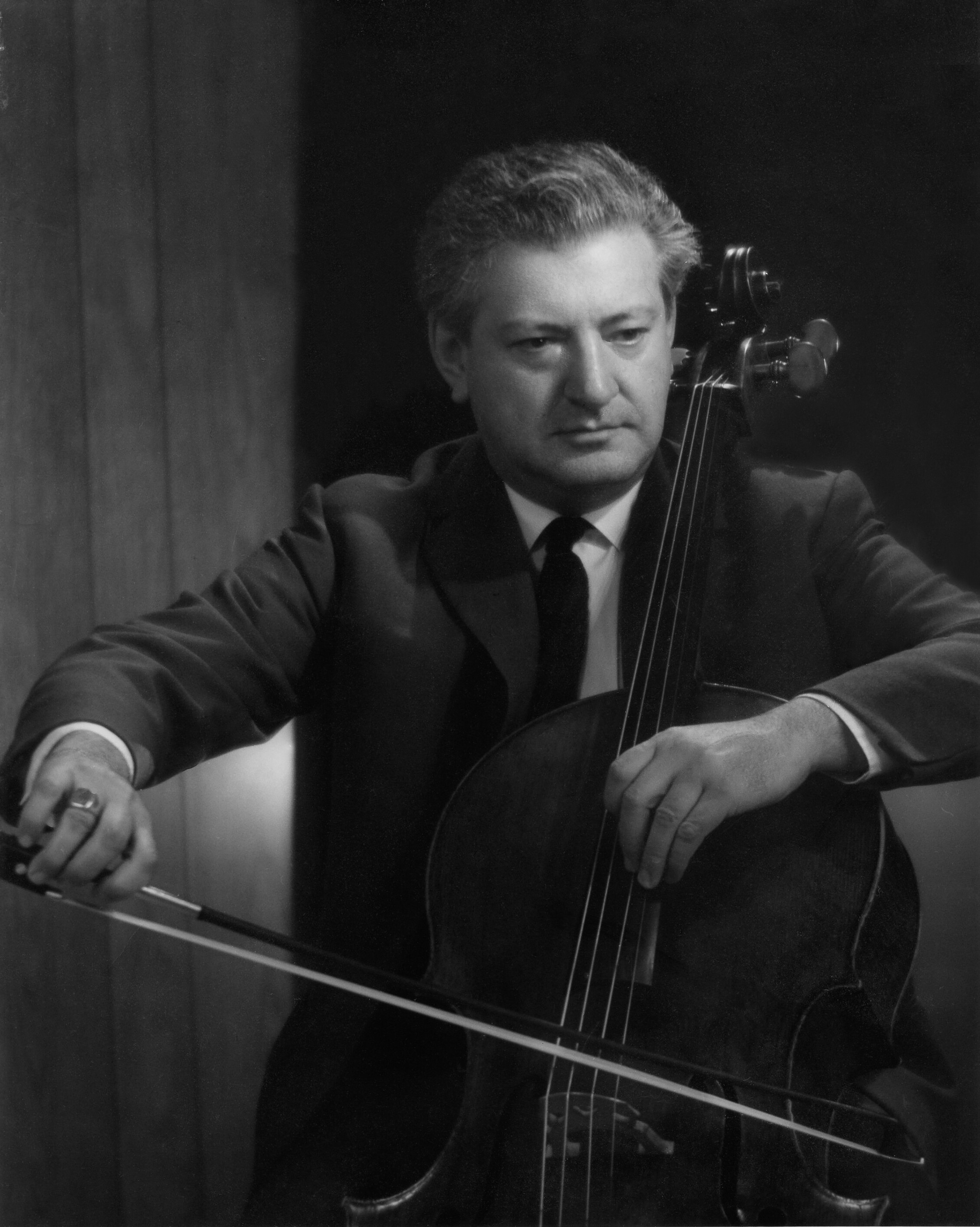
The Bow Hold
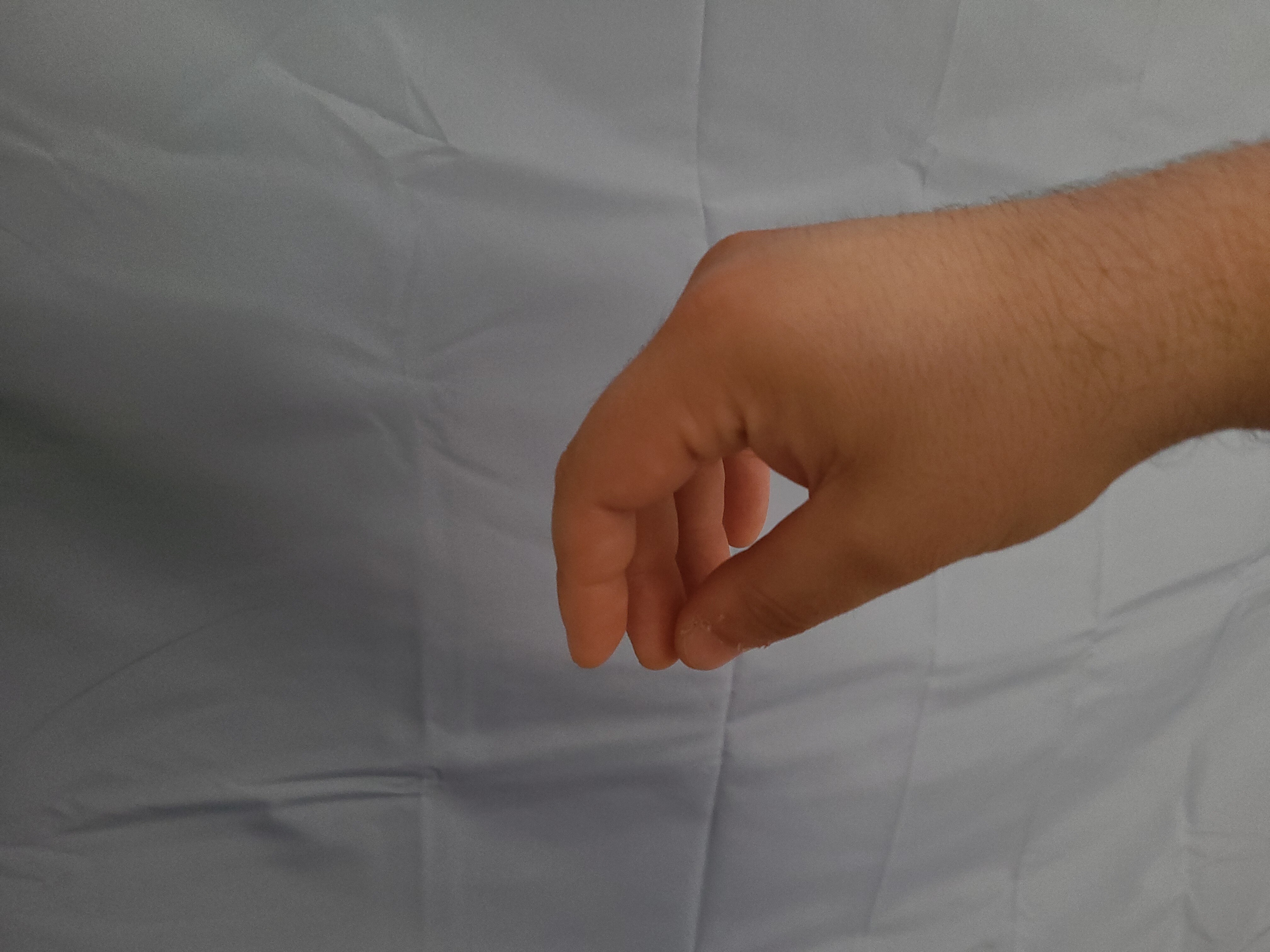
To find the natural spacing of your fingers in the right hand:
- Hold your right forearm parallel to the floor
- Relax your hand and let it dangle
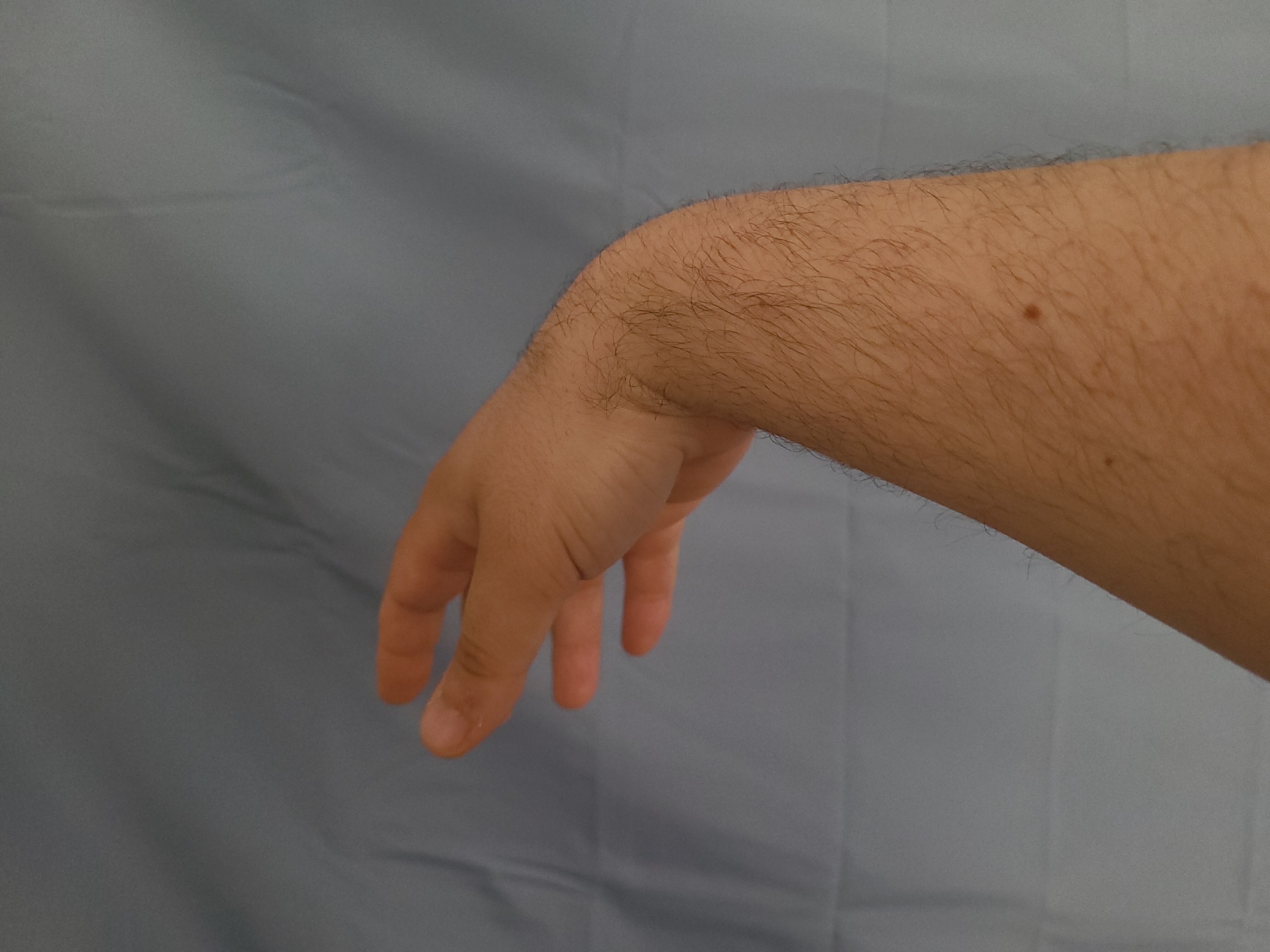
When holding the bow, bring your thumb and middle finger together. This positioning should be maintained as closely as possible during play.
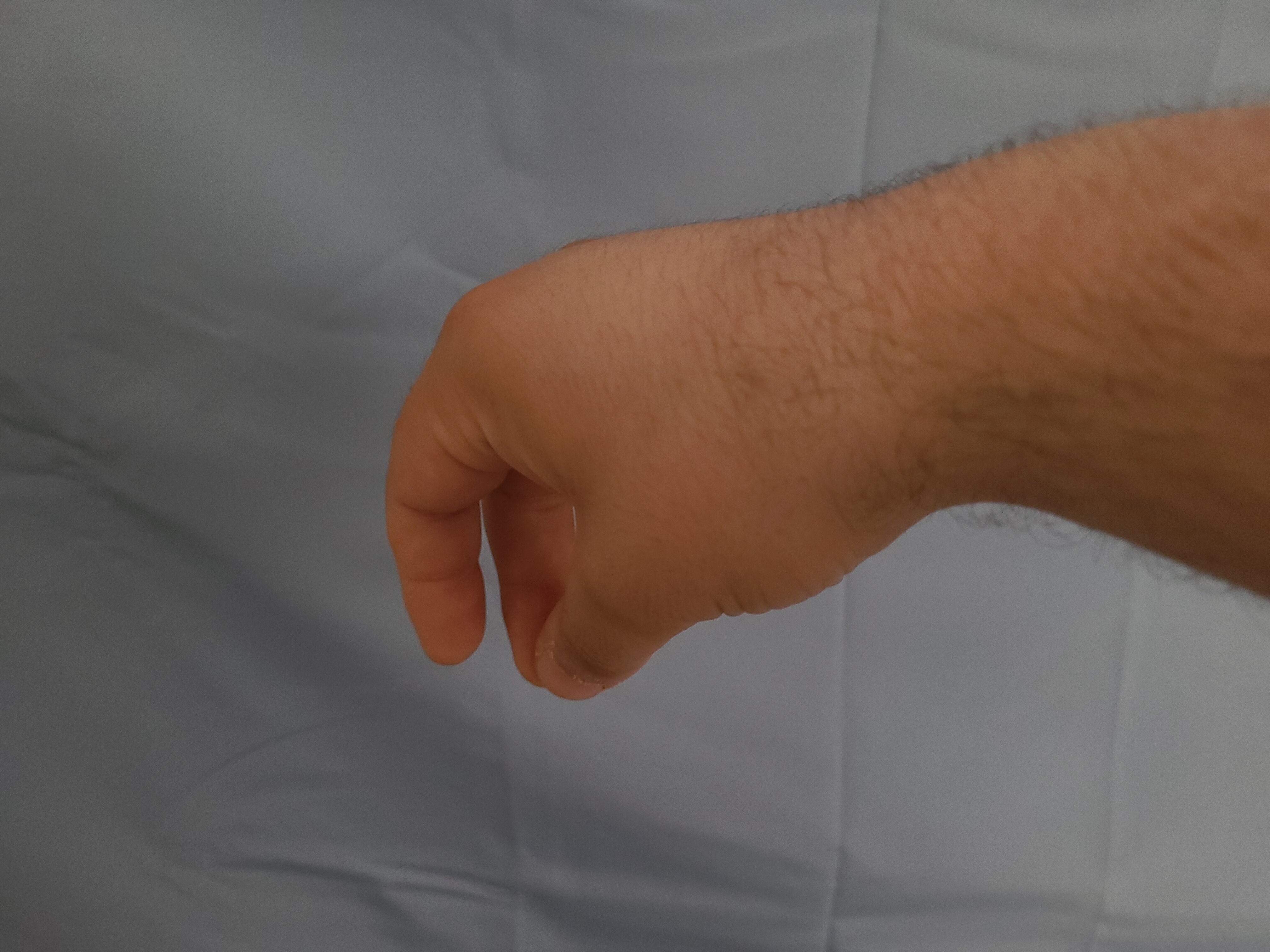 | 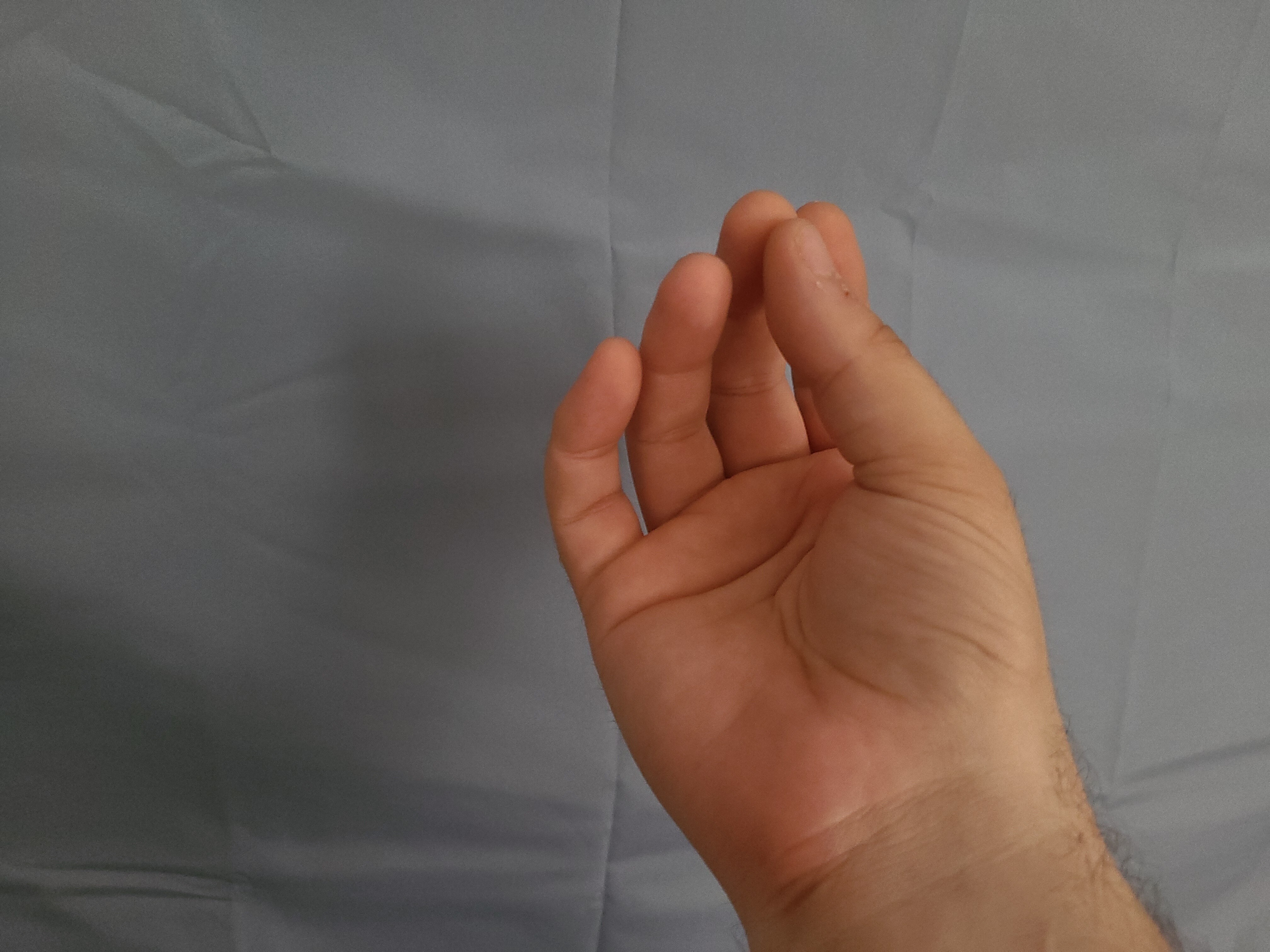 |  |
- The thumb should be kept straight but not tense when holding the bow.
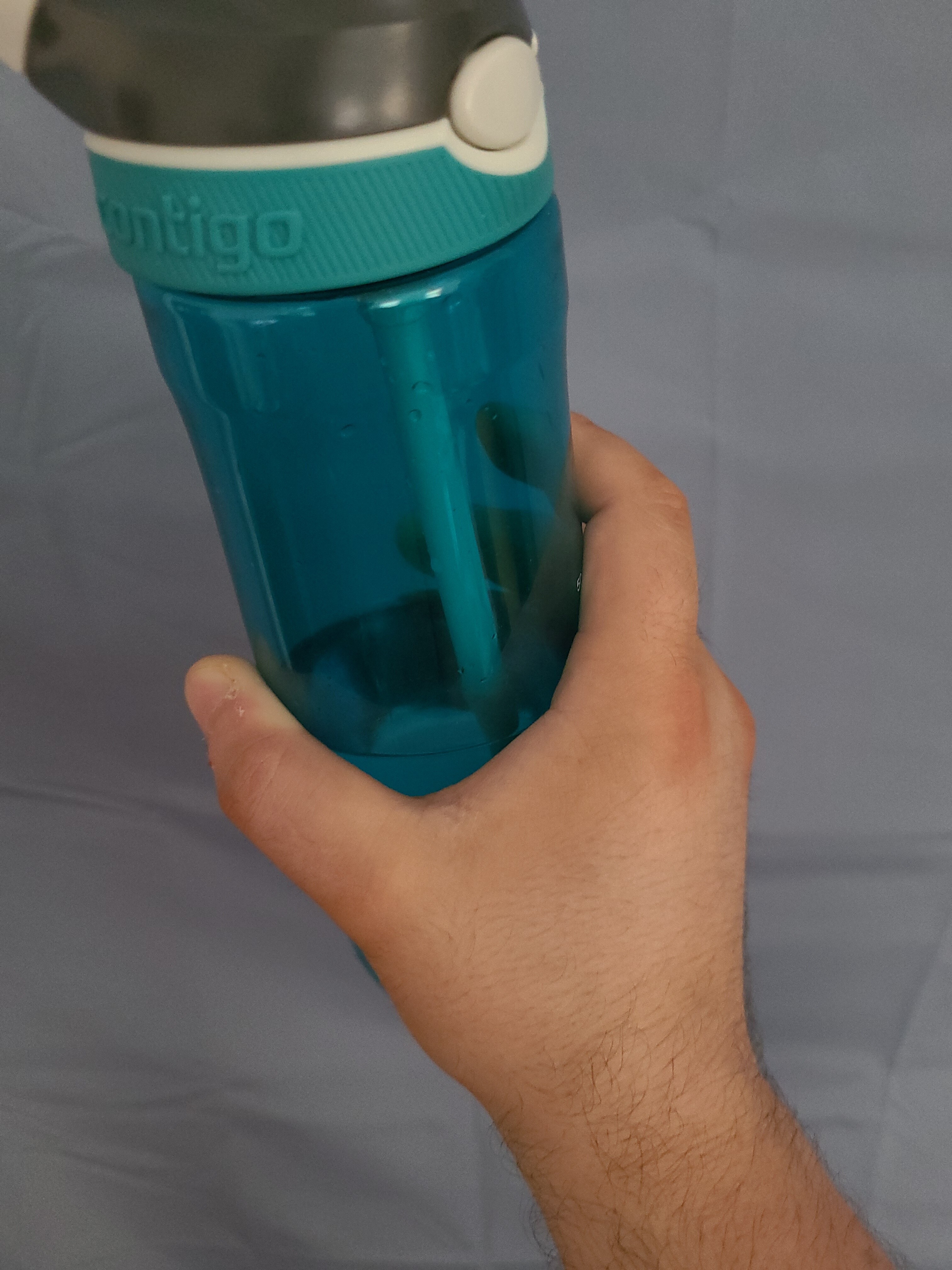
- Whether the thumb more curved or straight depends on the size of the object we are holding.
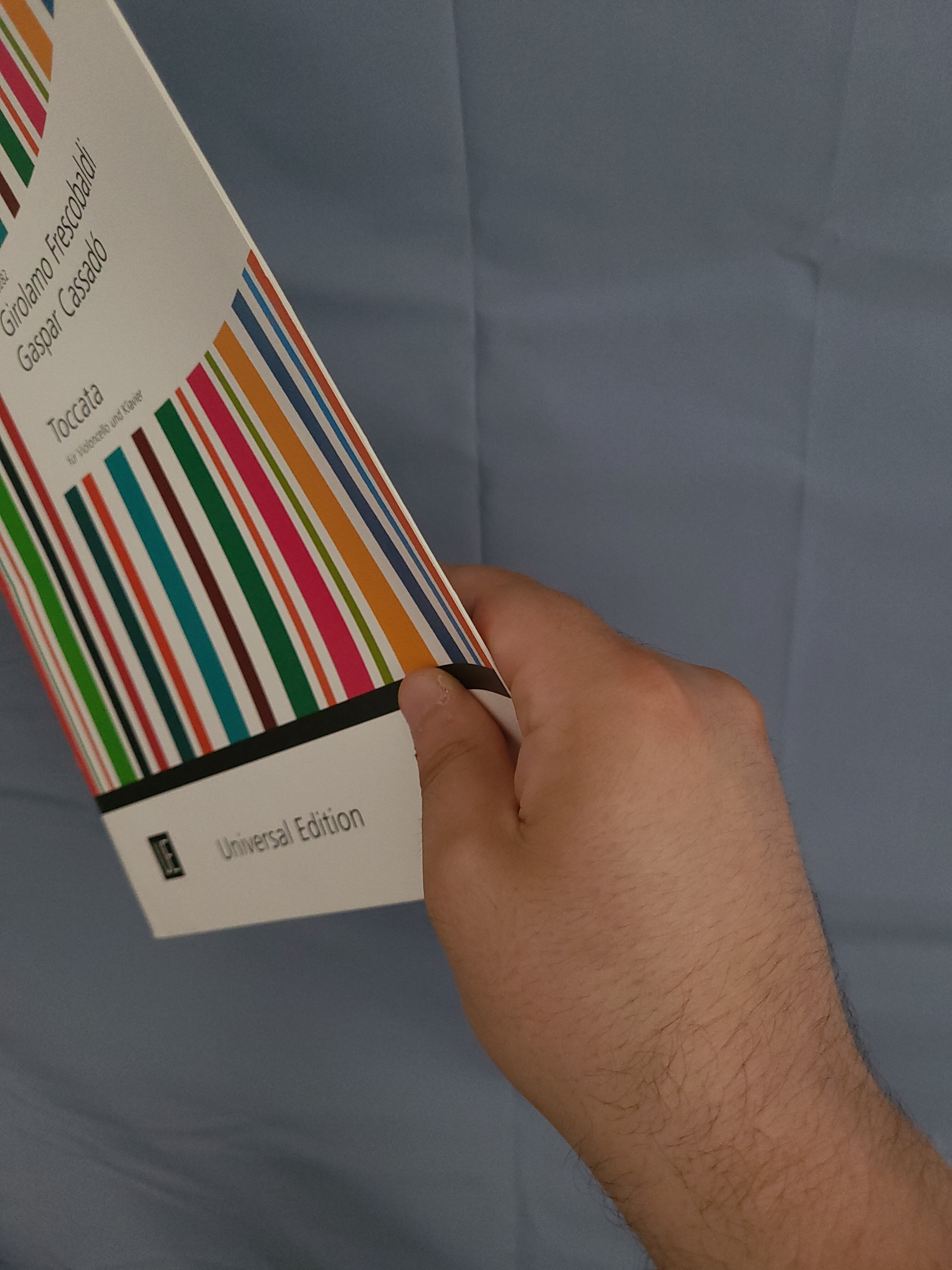
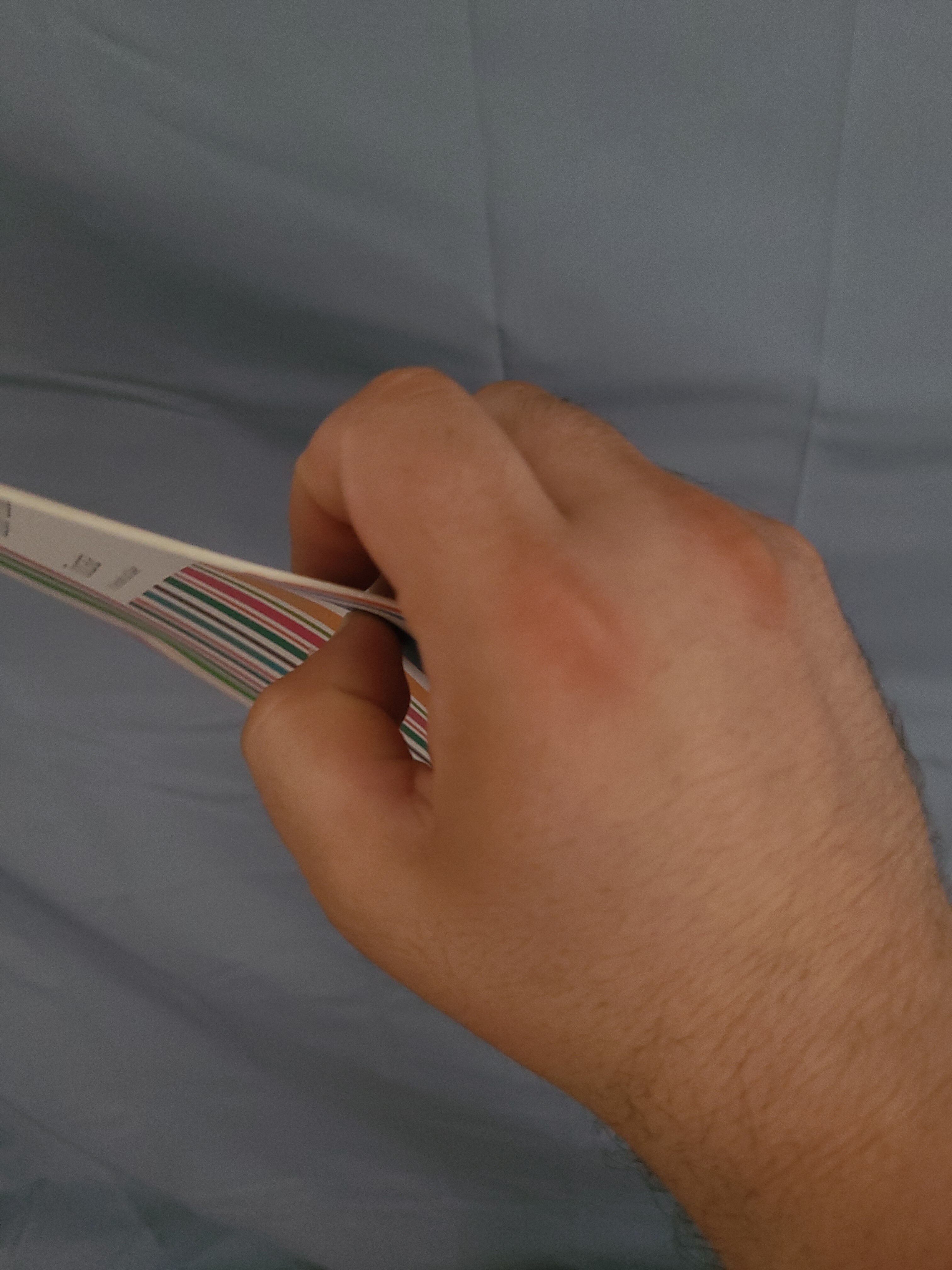
- When grabbing a large object, such as a water bottle, our fingers tend to curl around it. When pulling a thin object, such as paper, the thumb tends to be straighter.
- Treat the bow as a thin object that we pull. So keep the thumb straight.
- You would have to go out of your way to curl your fingers when pulling a book.
 |  |  |
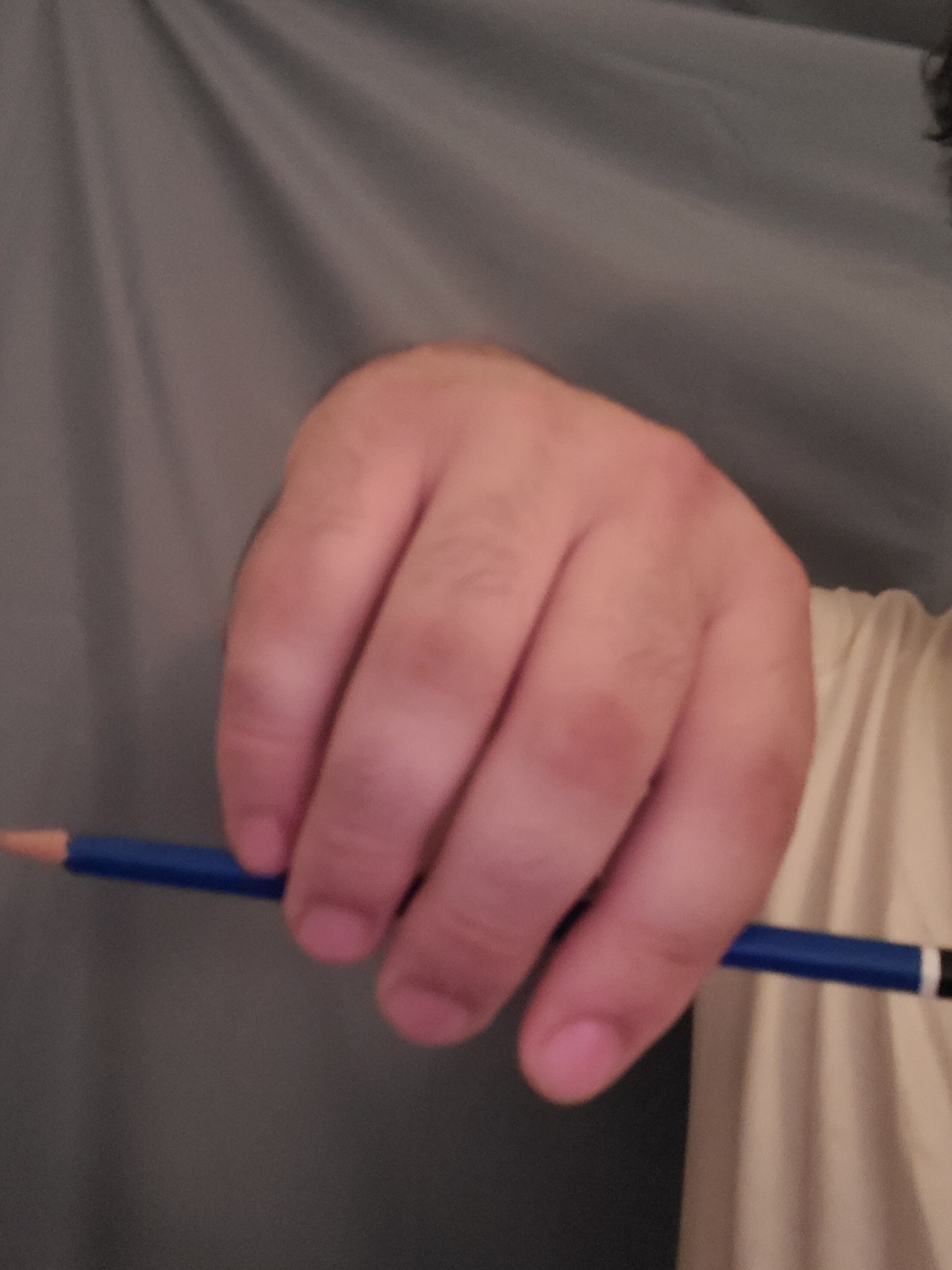
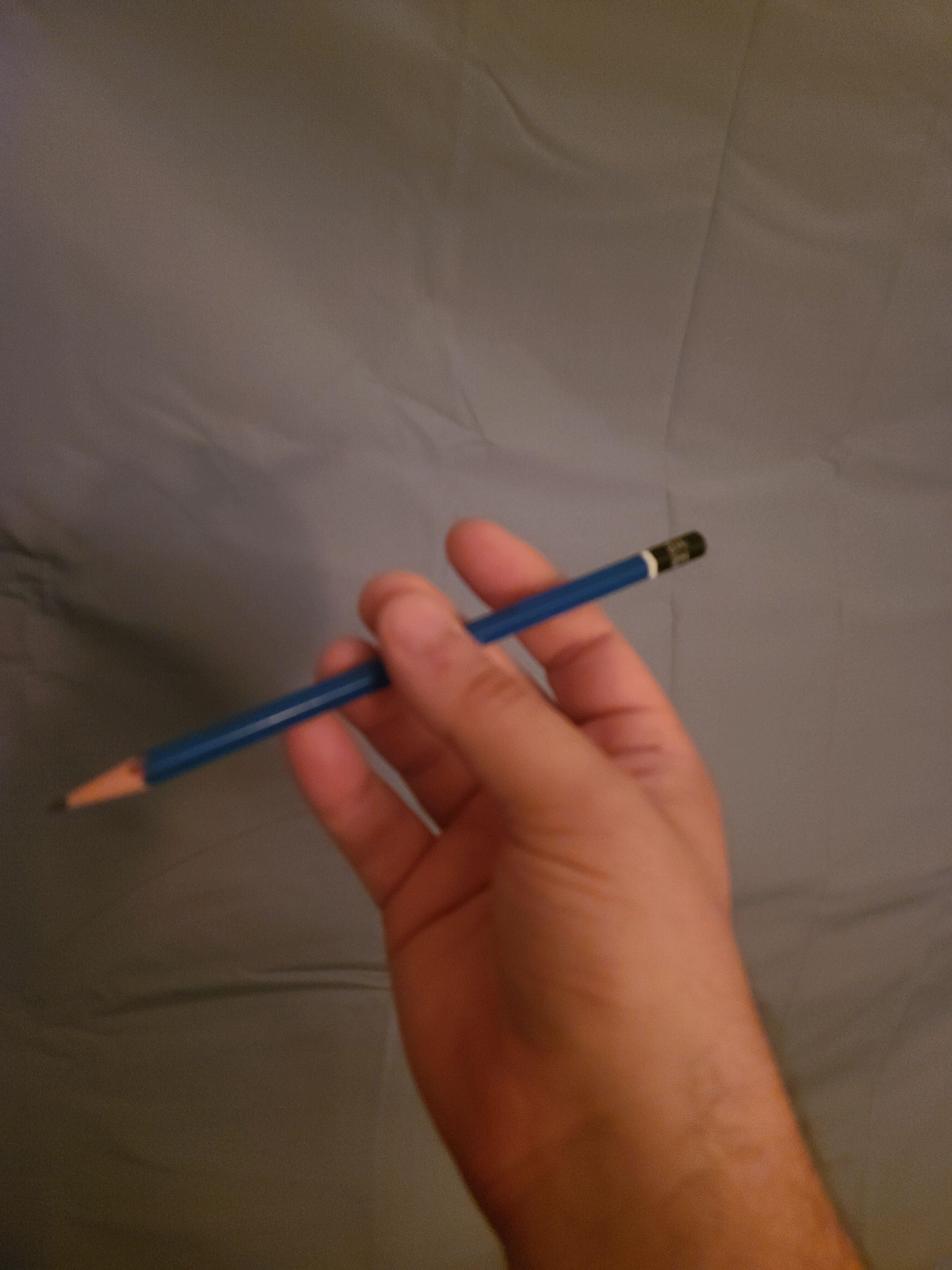
Practice bow holding using a pencil, as it mimics a smaller version of the bow-stick.
 |  |
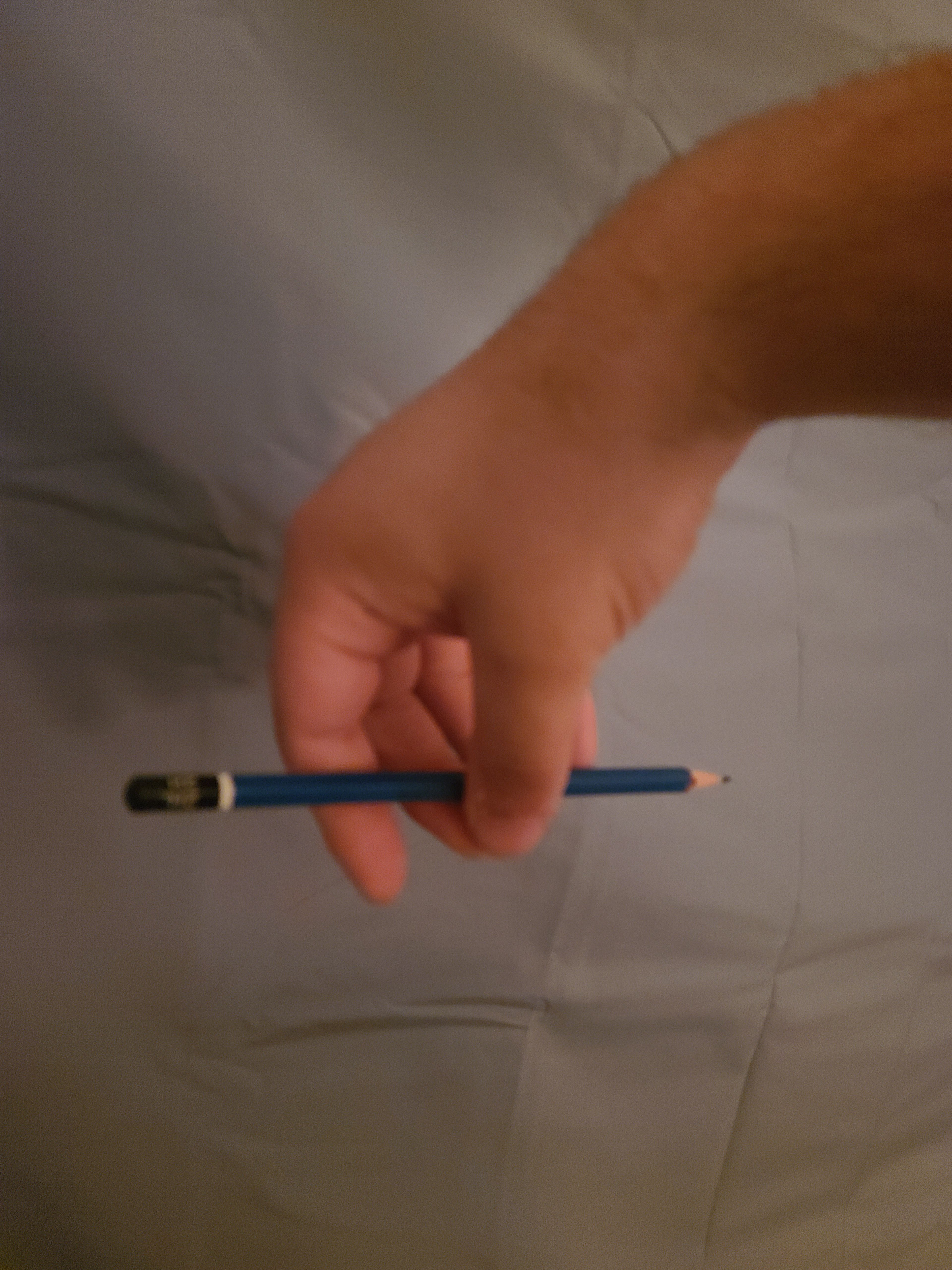 | 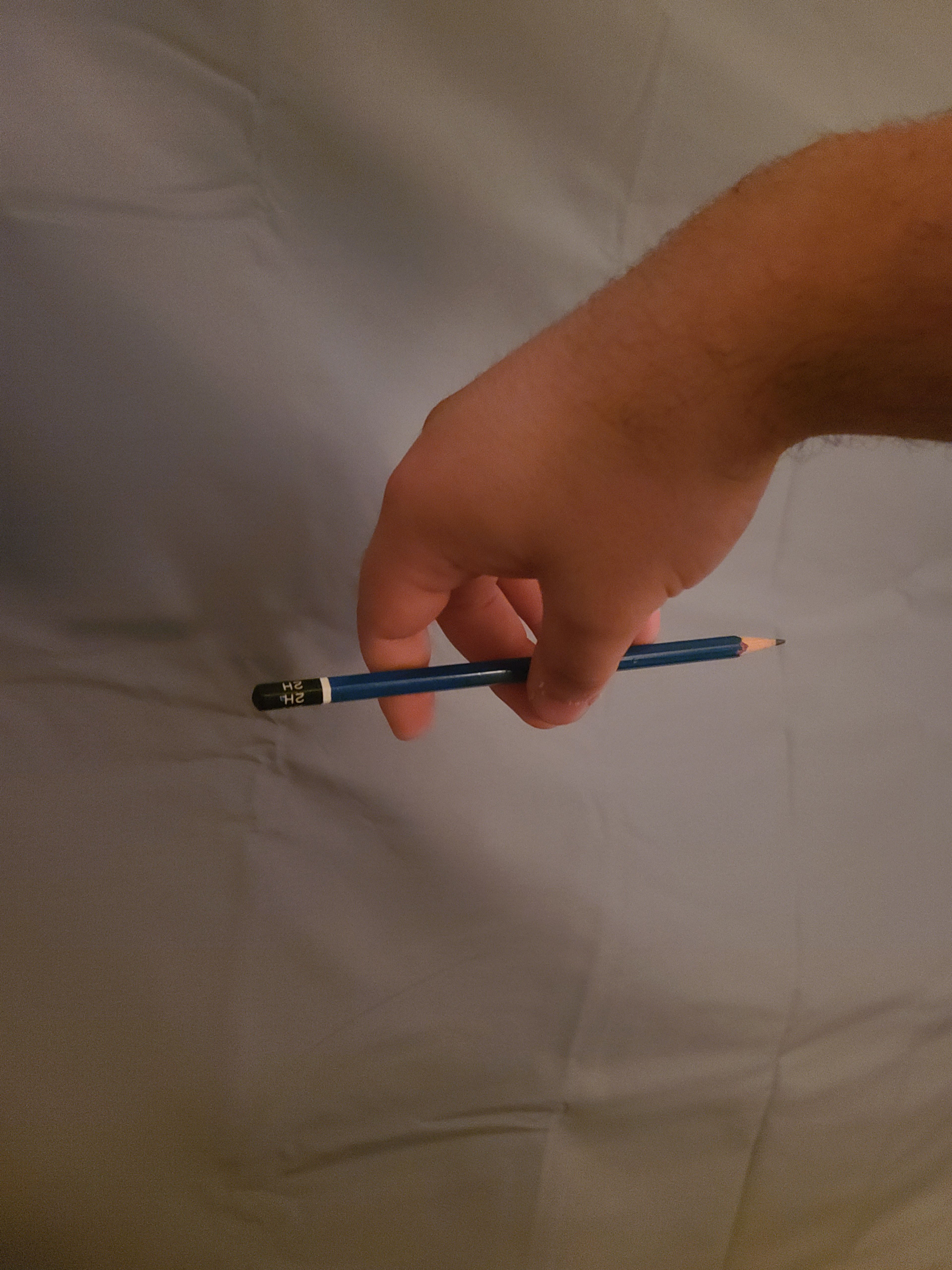 |
- you should feel that you are holding the bow in your fingertips
- the bow rests on your thumb for cello and more on your middle finger for violin; do not let it rest on the strings when you are playing
- your first finger should be passive and resting on the stick at the joint
- your thumb and middle finger are opposite each other and should be touching
- your pinky should be very nearly on top of the stick
- the advantage of putting it directly on top of the stick is that it is very easy to maintain a feeling of balance
- George Neikrug placed his pinky just a little lower so that he could manipulate the bow much better; more on this later